Physical AI

Physical AI that remembers space

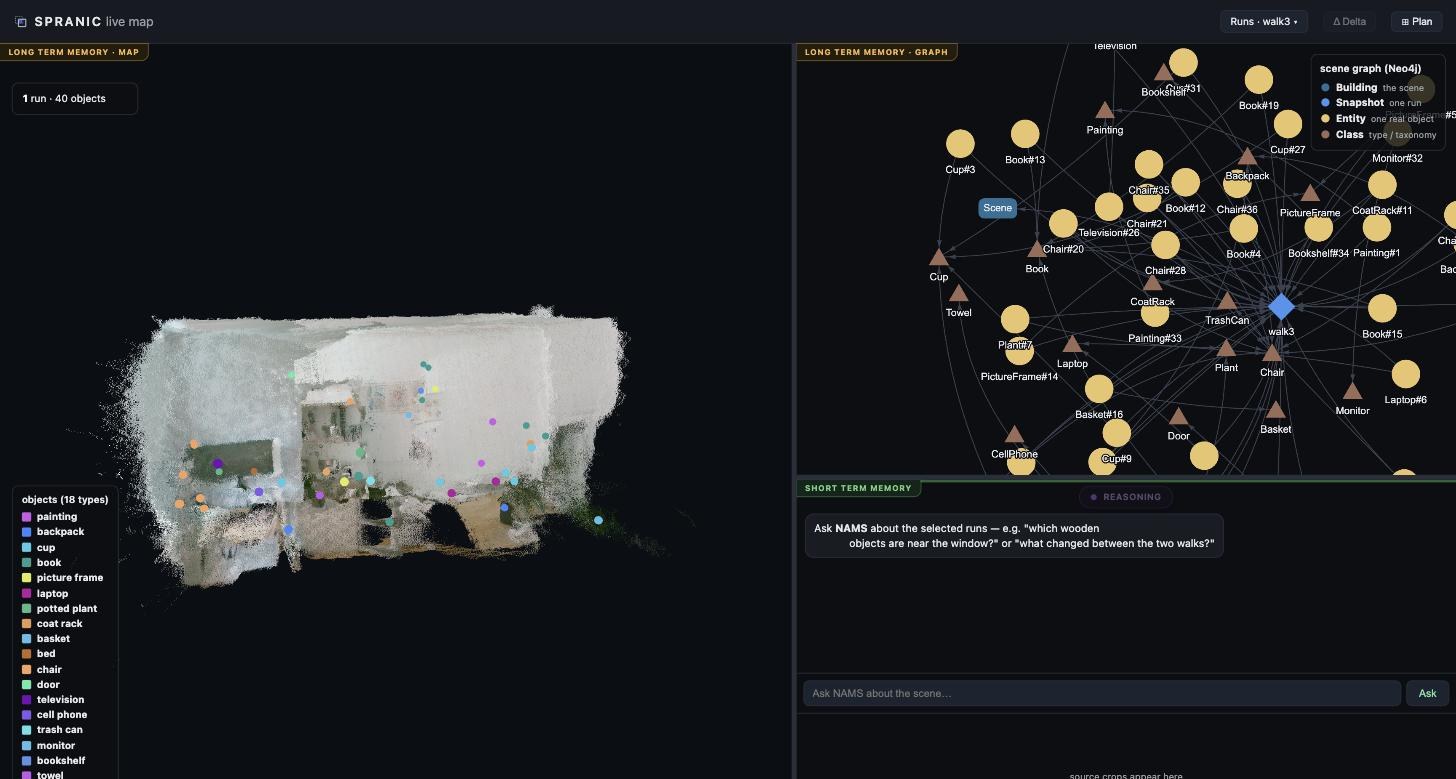
spranic snapshots a space over time, analyzes the delta between snapshots, and lets you travel across what changed.

Spatial memory for
the physical world.

spranic turns raw perception into a persistent, structured understanding of a real space: every object, where it sits, and how it relates to what surrounds it.

Not a photo. Not a point cloud you discard. A map that stays, that a machine can query, and that lays down a fresh snapshot every visit.

Snapshots over time,
and the deltas between.

  1. 01

    Snapshot

    Capture a space exactly as it is right now: every object, where it sits, and how it relates to what surrounds it. One moment, fully understood.

  2. 02

    Scene graph

    Turn each snapshot into a durable, queryable graph. Every object keeps a stable identity across time and across visits.

  3. 03

    Delta and time travel

    Diff any two snapshots to see what moved, appeared, or is gone, then travel back through the timeline to any moment in a place's history.

The real world
doesn't hold still.

A warehouse changes shift to shift. A construction site changes daily. A home is never the same room twice. A machine that acts in the physical world needs to know what a place was to understand what it is now.

Change is the signal. spranic makes it something you can build on: inventory that counts itself, inspections that flag what differs, robots that keep their bearings in a space that keeps moving.

Building in physical AI?
We'd like to hear from you.

Partnerships, pilots, or just curious what we're up to.

Get in touch